

Why Smart Scope Systems Are Essential for Precision Measurement in Malaysia
Malaysia’s manufacturing sector continues to evolve rapidly, especially in industries like electronics, semiconductors, automotive, and medical devices. As products become smaller, more complex, and highly regulated, the demand for precise and reliable measurement solutions has never been greater. This is where Smart Scope systems play a critical role.
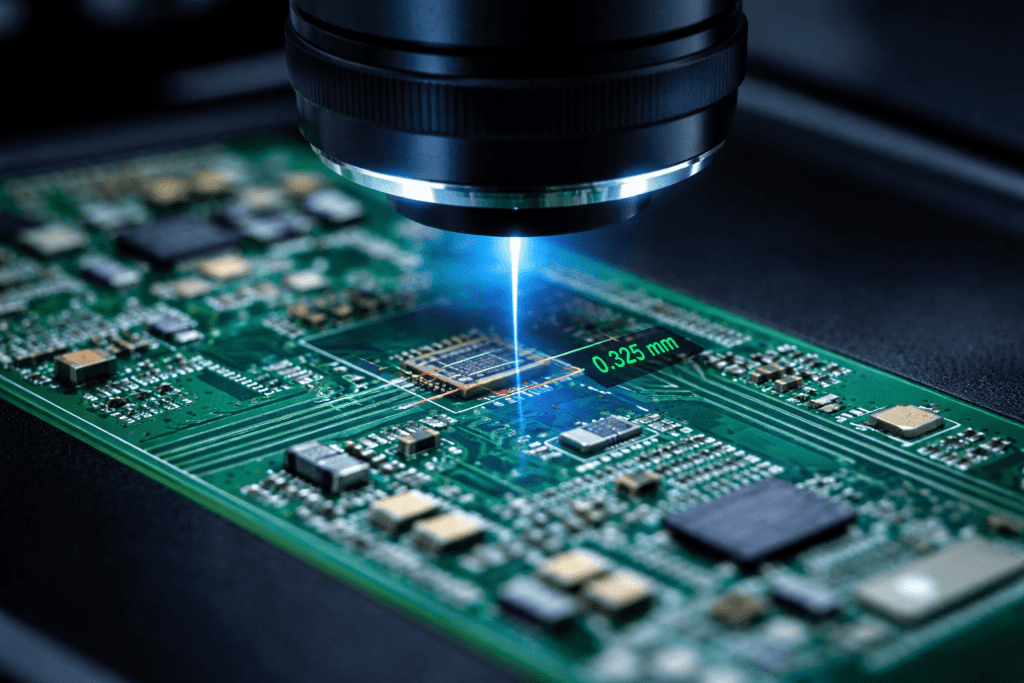
A Smart Scope, commonly known as a video measuring system (VMM), combines advanced optics, high-resolution imaging, and intelligent software to deliver accurate, non-contact measurements. For Malaysian manufacturers aiming to stay competitive, adopting this technology is no longer optional—it is essential.
The Shift from Measurement to Measurement Strategy
In the past, measurement was a final checkpoint—something done after production to catch defects. Today, it has become a core part of the manufacturing strategy.
Manufacturers in Malaysia are now asking:
- How can we detect errors earlier in the process?
- How do we reduce dependency on skilled manual inspectors?
- Can measurement data be used to improve production decisions?
Smart Scope systems answer these questions by turning measurement into a real-time, data-driven process rather than a reactive one.
What Makes Smart Scope Different from Conventional Systems?
Unlike traditional tools that rely heavily on operator skill, Smart Scope systems combine optical technology with intelligent software, allowing machines to perform complex inspections with minimal human intervention.
Instead of just measuring dimensions, these systems:
- Interpret edges automatically
- Detect inconsistencies instantly
- Store and analyse inspection data over time
- Enable repeatable measurement routines across batches
This shift reduces variability and brings a new level of control to production environments.
Smart Scope vs Conventional Inspection Approach
| Aspect | Conventional Inspection | Smart Scope System |
|---|---|---|
| Inspection Timing | Post-production | Real-time / in-process |
| Operator Dependency | High | Low |
| Data Usage | Minimal | Data-driven insights |
| Error Detection | Reactive | Proactive |
| Scalability | Limited | Highly scalable |
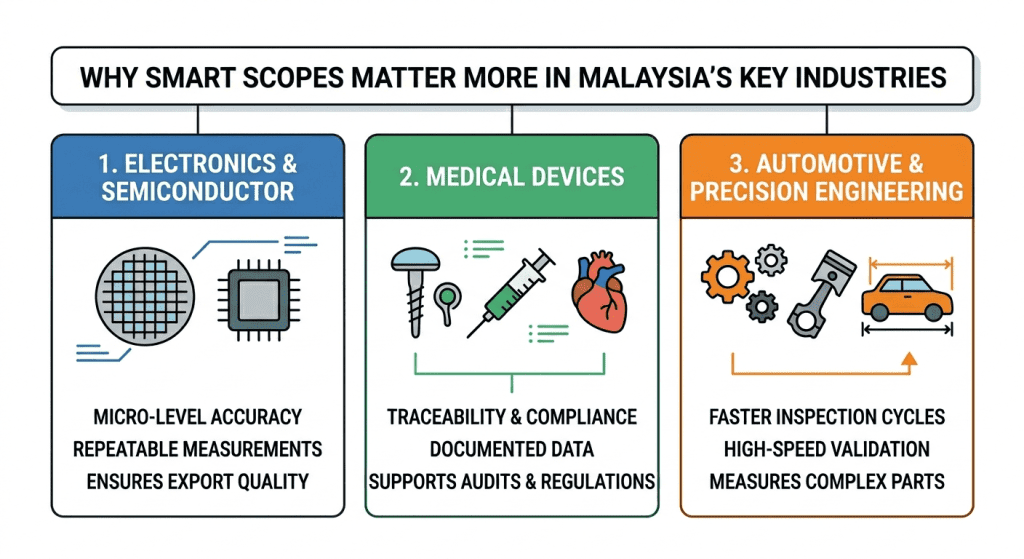
Why Smart Scope Matters More in Malaysia’s Key Industries
Electronics & Semiconductor
With shrinking component sizes and increasing circuit density, even the smallest deviation can lead to failure. Smart Scope systems ensure repeatable accuracy at micro levels, which is critical for export-quality production.
Medical Devices
Compliance and traceability are non-negotiable. Smart Scope systems provide documented measurement data, supporting audits and regulatory requirements.
Automotive & Precision Engineering
As parts become more complex, manufacturers need faster inspection cycles without sacrificing accuracy. Smart Scope systems enable high-speed validation of critical dimensions.
Turning Quality Control into a Competitive Advantage
Many manufacturers still view inspection as a cost centre. However, companies adopting Smart Scope systems are using it as a competitive differentiator.
Here’s how:
- Reduced rejection rates through early detection
- Faster production cycles with automated inspection
- Stronger client confidence with consistent quality data
- Better decision-making using historical measurement insights
In competitive markets, the ability to prove quality consistently can be just as important as producing it.
Where Smart Scope Delivers the Most Value
| Area | Impact |
|---|---|
| Production Efficiency | Shorter inspection cycles |
| Quality Consistency | Reduced variation between batches |
| Cost Control | Less rework and material waste |
| Audit & Compliance | Easier documentation and traceability |
| Workforce Optimization | Less reliance on manual inspection skills |
When Traditional Measurement Starts Holding You Back
Many Malaysian manufacturers don’t realise they’ve outgrown their current inspection methods until problems start appearing.
Common signs include:
- Increasing rejection or rework rates
- Bottlenecks in quality control processes
- Difficulty maintaining consistent standards
- Heavy reliance on experienced operators
At this stage, upgrading to a Smart Scope system isn’t just beneficial—it becomes necessary to sustain growth.
The Role of Smart Scope in Industry 4.0
As Malaysia continues adopting Industry 4.0 practices, Smart Scope systems are becoming part of a connected manufacturing ecosystem.
They can:
- Integrate with quality management systems
- Provide real-time inspection feedback
- Support automation and smart factory setups
This allows manufacturers to move toward predictive quality control, where issues are prevented before they occur.
Conclusion
Smart Scope systems are no longer just precision tools. They are strategic assets in modern manufacturing. For Malaysian industries striving to meet global standards, improve efficiency, and remain competitive, these systems offer a clear path forward.
By transforming how measurement is performed, analysed, and applied, Smart Scope technology enables manufacturers to shift from reactive quality control to proactive quality assurance.
Frequently Asked Questions (FAQs)
How is a Smart Scope different from a standard video measuring system?
A Smart Scope typically includes more advanced automation, intelligent software, and data analysis capabilities for higher efficiency and consistency.
Can Smart Scope systems be integrated into existing production lines?
Yes, many systems can be integrated into current workflows and adapted to different inspection requirements.
Is Smart Scope suitable for high-mix, low-volume production?
Yes, programmable measurement routines make it ideal for flexible manufacturing environments.
Do Smart Scope systems require skilled operators?
They are designed to reduce operator dependency, though basic training is still required.
How does Smart Scope improve long-term manufacturing performance?
By providing consistent data and reducing errors, it helps optimise processes and improve overall product quality.